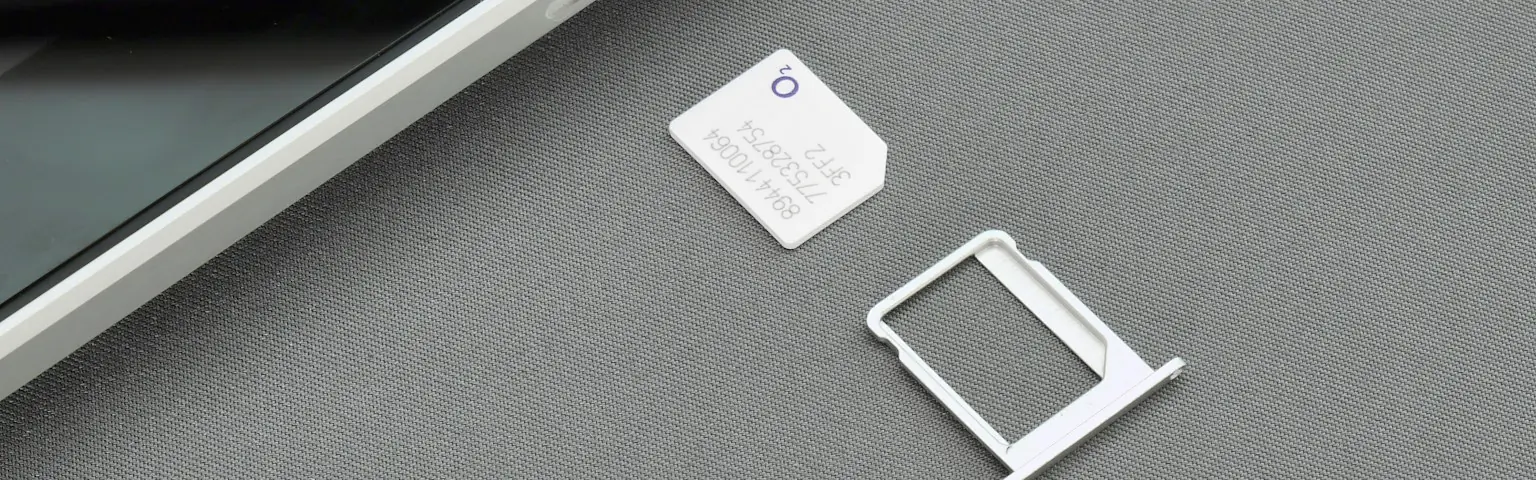


For most travelers, an eSIM is a better choice than roaming: data usually costs considerably less, it is more flexible when you move between countries, and your data usage is easier to manage. Roaming only makes sense if you need to keep your home number active to receive calls or OTP codes.
Whether you are traveling for leisure or business, reliable internet access abroad is a must. Many people can't decide between international roaming and a travel eSIM – the two most popular ways to get online overseas. So, eSIM vs roaming: which one is better for travelers? This article compares the two across 7 key criteria to help you make the right choice.
What are an eSIM and a travel eSIM?
An eSIM is a digital SIM built into your phone that lets you use mobile services without swapping a physical SIM card.
A travel eSIM lets you get online abroad without removing or replacing your main SIM. You can buy an international travel eSIM online, receive a QR code by email, then scan it and activate it before your flight or right after you land.
Key benefits:
- No need to remove your SIM, so there is no risk of losing your home SIM.
- Buy and receive your eSIM online – no waiting or queuing.
- Get your eSIM by email right after payment.
- Quick setup – it only takes a few minutes.
- Easily switch plans without swapping SIM cards.
- A wide choice of country and regional plans.
What is international roaming?
Roaming (international roaming) is a service provided by your home carrier in Vietnam (or wherever you live) that lets your physical SIM automatically connect to partner networks when you are abroad.
Pros:
- Nothing complicated to set up – just subscribe to the service and turn on “Data Roaming”.
- You keep your home phone number (calls, SMS, OTP codes…).
Cons:
- High costs, usually charged per MB or per day.
- Unexpected charges are common and data usage is hard to control.
- Network quality depends on the roaming partner.
eSIM vs roaming compared
| Criteria | eSIM | Roaming | Best option |
|---|---|---|---|
| Cost | Usually much cheaper than roaming, especially if you need a lot of data. Example: see plan prices at Europe 33 Countries eSIM. | Expensive, with frequent extra charges – the more you use, the higher the bill. Example: Viettel roaming in Europe, DR3 plan – 1GB/3 days for 130,000 VND (reference price, subject to change). | ✅ eSIM |
| Internet speed | Connects directly to local networks, so speeds are fast and stable. Typically 20–100 Mbps (4G/5G) | Depends on partner networks and is often much slower. Typically 5–20 Mbps (often throttled) | ✅ eSIM |
| Data allowance | Usually more data for the same money, plenty of options and easy to track (from 1GB to unlimited, depending on the destination) | 2–5GB with few options. Some plans charge per MB. | ✅ eSIM |
| Activation | Set up in 5–10 minutes by scanning a QR code, without removing your SIM. | Works once roaming is on, but activation can take 2–24 hours. | ✅ eSIM |
| Country coverage | Many countries and regions, with single-country, regional and multi-country plans | Usually 80–150 countries depending on the carrier, less flexible | ✅ eSIM |
| Keep your Vietnamese number | Yes (Dual SIM – your main SIM stays active alongside) | Yes | ⚖️ Tie |
| Device requirements | Your device must support eSIM | Any phone | ✅ Roaming |
Should you choose an eSIM or roaming?
Choose an eSIM if:
- Your trip lasts 2 days or more – the savings add up from day two
- You are visiting several countries – multi-country plans are convenient and usually much cheaper
- You need a lot of data (>1GB/day) – eSIMs usually give you more data for the same money
- Saving money is a priority – usually considerably cheaper than roaming
- Your device supports it – iPhone XS or later, Samsung S20 or later, Google Pixel…
- You need fast speeds – usually faster than roaming because it uses local networks directly
- You want flexibility – buy anytime and switch plans easily
Choose roaming if:
- Your trip is very short (<24 hours) – the cost difference is small
- Your phone doesn't support eSIM – older or budget models
- You'd rather not deal with technology – it just works automatically
- Your company is paying – cost is not a concern
Quick decision table:
| Situation | Recommended option |
|---|---|
| 1–2 day trip | eSIM or roaming |
| Trip of 3+ days | eSIM |
| One country, light data use | eSIM or roaming |
| One country, heavy data use | eSIM |
| Multiple countries | eSIM |
| iPhone XS or later | eSIM |
| Older phone | Roaming |
| Saving money comes first | eSIM |
| Absolute simplicity comes first | eSIM |
| You need high speeds | eSIM |
| Price doesn't matter | Roaming or eSIM |
► Bottom line: For most travelers, an eSIM is the better choice – cheaper, faster and more flexible. Only go with roaming if your trip is very short, your device doesn't support eSIM, or you need to keep your home number to receive calls.
Frequently asked questions
Is an eSIM more expensive than roaming?
Usually not. For example, Viettel roaming in Thailand costs around 250,000 VND for 5GB over 10 days, and Viettel roaming in Japan costs around 150,000 VND for 1GB/day over 3 days (reference prices, subject to change). A travel eSIM, on the other hand, usually gives you more data for less – you can check plan prices at Thailand eSIM and Japan eSIM. On many longer plans, an eSIM also offers far more data than roaming at the same price.
Can I use an eSIM alongside my physical SIM?
Yes. You can use the eSIM for internet access while keeping your physical SIM for calls and texts. Learn more: using an eSIM and your physical SIM at the same time.
Can I install an eSIM before my flight?
Yes. You can install your eSIM in Vietnam and have it activate when you land, so you are online right away.
Does an eSIM come with a phone number for calls?
It depends on your destination, the plan and the provider. Most travel eSIMs are data-only (you can still call through apps like Zalo, WhatsApp or Viber), while some plans include voice calls – check each plan's details on its destination page, for example Europe Orange Data + Calls eSIM.
Where can I buy a reliable eSIM?
At TouriESIM, you can choose eSIMs for many countries and regions around the world (see all destinations), pay online and receive your QR code by email right after payment.
Do eSIMs expire?
Yes. Each plan has a clear validity period (usually 1, 3, 5, 7, 15 or 30 days, depending on the plan), which makes it easy to match your trip. In addition, an eSIM QR code usually has to be scanned within 30 days of purchase. So it's best to buy and scan your eSIM QR code no more than 30 days before your trip so it doesn't expire.
Do eSIMs work in every country?
Travel eSIMs work in a great many countries and territories. TouriESIM offers single-country plans, regional plans and a Global eSIM – you can check whether your destination is covered on the destinations page. Roaming, by contrast, depends on your home carrier's partner networks (usually 80–150 countries).
Can I buy an eSIM after I arrive?
Yes, you can buy and activate an eSIM after you arrive abroad. However, it's best to buy at least 24 hours in advance because:
- You'll have internet as soon as you land at the airport (to book a Grab or check Google Maps).
- You won't need to hunt for free WiFi to download and install the eSIM.
- You'll have time to get help from TouriESIM's Vietnamese-speaking support team if anything goes wrong.
- It's less stressful and you won't feel rushed.
Is an eSIM faster than roaming?
Usually, yes. A travel eSIM connects directly to the local carrier's network, so typical speeds are around 20–100 Mbps (4G/5G), while roaming often only reaches 5–20 Mbps because it is limited by partner networks and routing back to your home carrier. Actual speeds also depend on your location, the carrier, the plan and the time of day.
Conclusion
After looking at the key criteria (cost, speed, data allowance, convenience, coverage and technical requirements), the conclusion is clear: an eSIM is a better option than roaming for most international travelers.
If your main goal is fast, stable and affordable internet, choose an international travel eSIM.
If you need to keep your home number to receive calls, use roaming – but limit your data use to avoid high charges.